Timeline
Year
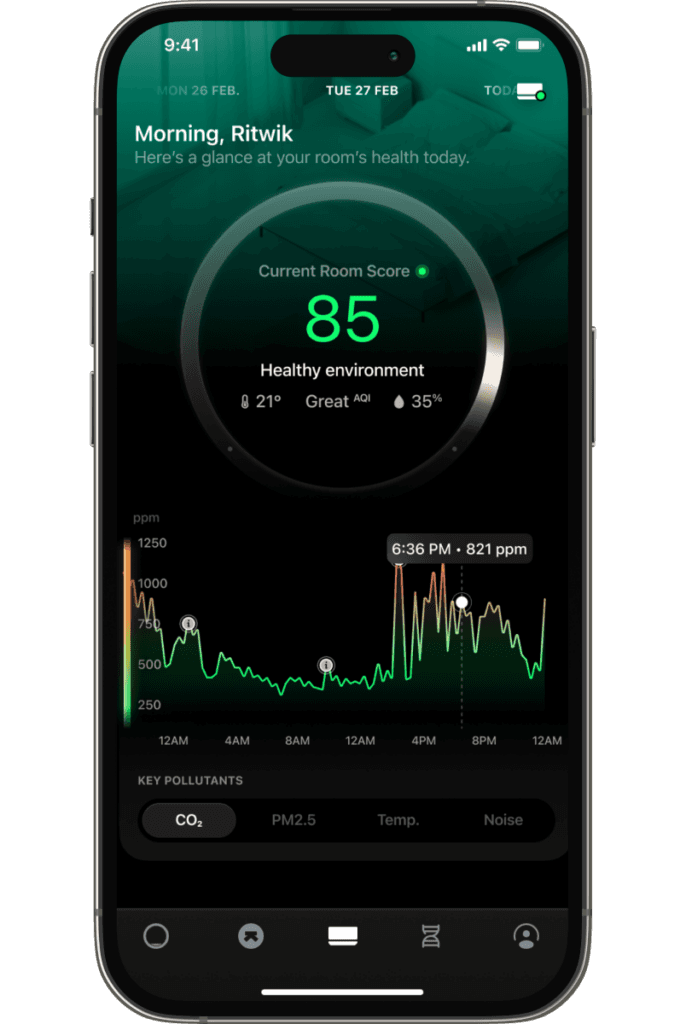
(Overview)
Sleep Conditions
Temperature, humidity, air quality, noise, and light exposure define sleep depth.
Intervention targets uninterrupted recovery rather than longer time in bed.
Air Quality Load
CO₂, VOCs, and particulate matter quantify respiratory stress.
Reducing this load improves oxygen utilisation and overnight recovery.
Thermal Regulation
Ambient temperature and deviation from comfort range affect nervous system balance.
Thermal control reduces physiological strain during rest.
Circadian Alignment
Light exposure timing defines hormonal and sleep rhythm stability.
Correct alignment improves energy availability across the day.